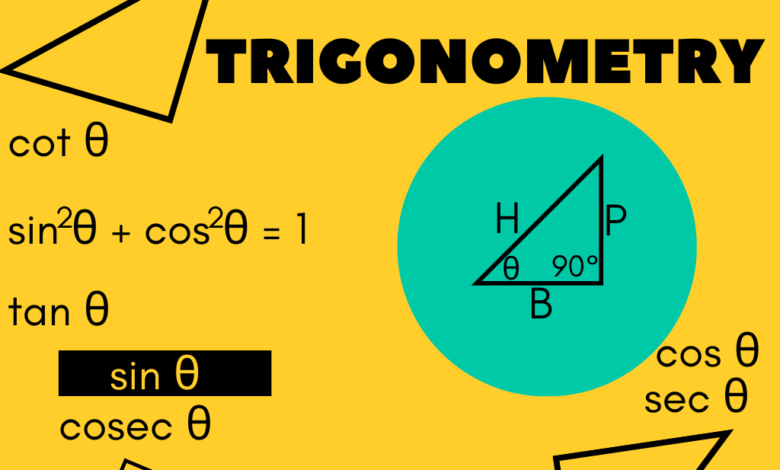
Trigonometry is one of the most fascinating branches of mathematics, connecting the study of angles and triangles to countless real-world applications. From measuring the height of mountains to calculating the trajectory of satellites, trigonometry plays a crucial role in science, engineering, architecture, navigation, and technology. The word “trigonometry” originates from the Greek words trigonon (triangle) and metron (measure), which together mean “measurement of triangles.” Although it began as a method for solving geometric problems, trigonometry has evolved into a powerful mathematical discipline used across various industries and academic fields.
For students, understanding Trigonometry is often a significant milestone in mathematics education. It introduces concepts that go beyond simple arithmetic and algebra, helping learners develop analytical and problem-solving skills. Trigonometry forms the foundation for advanced topics such as calculus, physics, and engineering mathematics. Whether you are preparing for exams, pursuing a STEM career, or simply expanding your mathematical knowledge, mastering trigonometry can open the door to a deeper understanding of the world around you.
In this comprehensive guide, we will explore the fundamentals of trigonometry, its essential formulas and functions, practical applications, common challenges, and effective learning strategies. By the end of this article, you will have a solid understanding of why trigonometry remains one of the most important and widely used branches of mathematics.
Understanding the Fundamentals of Trigonometry
Primarily deals with the relationships between the angles and sides of triangles. The most commonly studied triangle in trigonometry is the right-angled triangle, which contains one angle measuring exactly 90 degrees. By analyzing the ratios between the sides of these triangles, mathematicians developed a set of functions that allow precise calculations involving distances, heights, and angles.
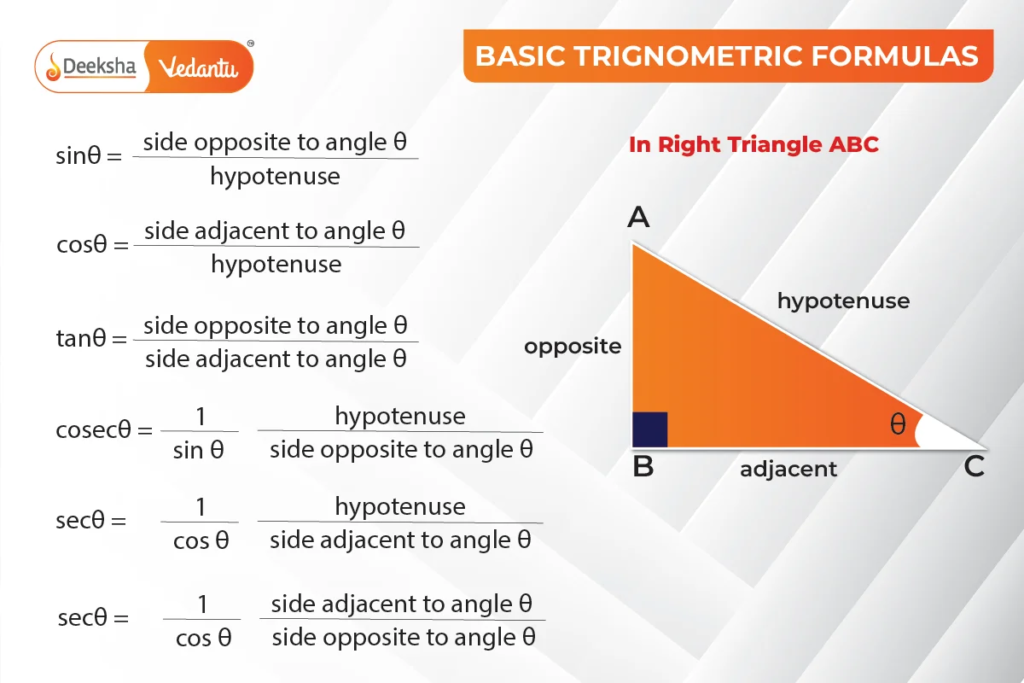
The key parts of a right triangle include the hypotenuse, opposite side, and adjacent side. The hypotenuse is the longest side and lies opposite the right angle. The opposite side is directly across from a selected angle, while the adjacent side lies next to it. Understanding these components is essential because they form the basis of trigonometric ratios.
Another important concept is angle measurement. Angles can be measured in degrees or radians. While degrees are more familiar to most people, radians are widely used in higher mathematics because they simplify many calculations and formulas. Learning how to convert between these units is a fundamental skill in trigonometry.
The study of trigonometry helps students visualize geometric relationships and understand how mathematical principles apply to real-world structures and movements. These foundations make it easier to grasp more advanced topics later on.
Trigonometric Functions Explained
The heart of trigonometry lies in its six primary functions: sine, cosine, tangent, cosecant, secant, and cotangent. These functions describe relationships between the sides and angles of right triangles and are used extensively in mathematics and science.
The three primary functions are sine (sin), cosine (cos), and tangent (tan). Sine represents the ratio of the opposite side to the hypotenuse, cosine represents the ratio of the adjacent side to the hypotenuse, and tangent represents the ratio of the opposite side to the adjacent side.
These functions provide powerful tools for solving unknown sides and angles in triangles. For example, if the angle and one side length are known, trigonometric functions can be used to calculate the remaining dimensions with remarkable accuracy.
The reciprocal functions—cosecant, secant, and cotangent—are derived from the primary functions. While they may seem less common initially, they become increasingly important in advanced mathematics, calculus, and engineering applications. Together, these six functions form the foundation of trigonometric analysis and problem-solving.
The Unit Circle and Its Importance
The unit circle is a powerful visual tool that expands trigonometry beyond right triangles. It is a circle with a radius of one unit centered at the origin of a coordinate plane. By studying points on the unit circle, students can understand trigonometric functions for all angles, not just those found in right triangles.
One of the greatest advantages of the unit circle is that it provides a simple way to determine sine and cosine values. Every point on the circle corresponds to coordinates that represent the cosine and sine of a particular angle. This relationship makes it easier to understand periodic behavior and graphical representations of trigonometric functions.
The unit circle also introduces important angles such as 30°, 45°, 60°, and 90°. Memorizing the values associated with these angles allows students to solve many trigonometric problems quickly and accurately. Furthermore, the unit circle serves as a bridge to advanced concepts involving waves, oscillations, and complex numbers.
Mastering the unit circle is often considered one of the most important steps in becoming proficient in trigonometry. It provides deeper insight into how trigonometric functions behave and interact across different quadrants of the coordinate plane.
Essential Trigonometry Formulas and Identities
Trigonometry includes numerous formulas and identities that simplify calculations and problem-solving. Among the most important are the Pythagorean identities, angle sum formulas, double-angle formulas, and half-angle formulas.
The most fundamental identity is:
This identity links sine and cosine and serves as the basis for many advanced derivations. Understanding why this relationship exists helps students appreciate the geometric foundations of trigonometry.
Angle sum and difference formulas enable the calculation of trigonometric values for combined angles.
These formulas are especially useful in advanced mathematics, signal processing, and physics. They allow complex expressions to be simplified and analyzed effectively.
Learning trigonometric identities requires practice and patience. However, once mastered, these formulas become invaluable tools for solving equations, proving relationships, and simplifying mathematical expressions.
Applications of Trigonometry in Real Life
One reason trigonometry remains relevant today is its extensive range of practical applications. Engineers use trigonometric calculations to design bridges, buildings, roads, and machinery. Architects rely on trigonometry to ensure structural accuracy and aesthetic balance in construction projects.
In astronomy, trigonometry helps scientists determine the distance between celestial bodies and analyze planetary motion. By observing angles and applying trigonometric principles, astronomers can estimate distances that are impossible to measure directly.
Navigation systems also depend heavily on trigonometry. Pilots, sailors, and GPS technologies use trigonometric calculations to determine locations, routes, and directions. Without trigonometry, modern navigation would be far less accurate and efficient.
The entertainment industry benefits from trigonometry as well. Computer graphics, video game development, animation, and virtual reality systems use trigonometric functions to create realistic movements, lighting effects, and three-dimensional environments. These examples demonstrate that trigonometry extends far beyond classroom exercises and plays a vital role in everyday life.
Tips for Learning Trigonometry Effectively
Many students find trigonometry challenging at first, but a strategic approach can make learning significantly easier. The first step is understanding concepts rather than simply memorizing formulas. Visualizing triangles, angles, and unit circle relationships helps build long-term comprehension.
Regular practice is equally important. Solving a variety of problems strengthens problem-solving skills and increases familiarity with formulas and identities. Students should also review mistakes carefully to understand where errors occur and how to avoid them.
Using diagrams, educational videos, interactive simulations, and graphing tools can enhance understanding. These resources make abstract concepts more concrete and engaging. Creating summary sheets of important formulas and identities can also improve retention.
Finally, consistency is key. Spending a small amount of time practicing trigonometry each day is often more effective than cramming before exams. Over time, repeated exposure builds confidence and mastery.
Conclusion
Trigonometry is far more than the study of triangles and angles. It is a powerful mathematical discipline that connects geometry, algebra, science, and technology. From understanding trigonometric functions and identities to applying them in engineering, astronomy, navigation, and computer graphics, trigonometry provides essential tools for solving real-world problems.
By mastering fundamental concepts, learning key formulas, and practicing regularly, students can develop a strong foundation in trigonometry that supports future academic and professional success. Although it may seem challenging initially, persistence and structured learning can transform trigonometry into one of the most rewarding areas of mathematics.
FAQs
What is trigonometry?
Trigonometry is a branch of mathematics that studies relationships between angles and sides of triangles.
Why is trigonometry important?
It is widely used in science, engineering, architecture, navigation, and technology.
What are the six trigonometric functions?
Sine, cosine, tangent, cosecant, secant, and cotangent.
What is the unit circle?
A circle with a radius of one unit used to visualize trigonometric functions and angle relationships.
What is the most important trigonometric identity?
The Pythagorean identity: sin²(x) + cos²(x) = 1.
How is trigonometry used in real life?
It is used in construction, GPS navigation, astronomy, engineering, computer graphics, and many other fields.
Is trigonometry difficult to learn?
It can be challenging initially, but consistent practice and conceptual understanding make it much easier.
What careers require trigonometry?
Engineering, architecture, physics, astronomy, computer science, surveying, and aviation are just a few examples.
How can I improve my trigonometry skills?
Practice regularly, understand concepts deeply, memorize essential formulas, and use visual learning tools.
What is the difference between degrees and radians?
Degrees divide a circle into 360 parts, while radians measure angles based on a circle’s radius and circumference.
You May Also Read: Sand Pit